How To Install FreeIPA on Ubuntu 16.04 LTS

Install FreeIPA on Ubuntu 16

FreeIPA is an open source identity management system for Linux/Unix environments which provides centralized account management and authentication, like Microsoft Active Directory or LDAP.

This article assumes you have at least basic knowledge of Linux, know how to use the shell, and most importantly, you host your site on your own VPS. The installation is quite simple and assumes you are running in the root account, if not you may need to add ‘sudo’ to the commands to get root privileges. I will show you through the step by step installation FreeIPA open source identity management system on an Ubuntu 16.04 Xenial Xerus server.

Install FreeIPA on Ubuntu 16.04 LTS

Step 1. First make sure that all your system packages are up-to-date by running these following apt-get commands in the terminal.

sudo apt-get update
sudo apt-get upgrade

Step 2. Installing FreeIPA.

The first thing that we are going to do is to prepare the Ubuntu 16.04 server to run FreeIPA. In order to do this, we are going to set the IP address on the system, In our case the host IP is 192.168.1.2/24:

### nano /etc/hosts
192.168.1.2 ipa.wpcademy.com

Next, Install the package dependencies required for our setup with the following commands if they are not already installed:

ipa-server-install

Then, install FreeIPA using following command:

apt-get install freeipa-server freeipa-server-dns

After the FreeIPA installation, authenticate to the Kerberos realm to ensure that the administrator is configured correctly:

​​kinit admin

Ensure the following ports are opened in the security group of the FreeIPA Server:


    80,443
    tcp 88,464
    ldap 389

Step 3. Accessing FreeIPA.

FreeIPA will be available on HTTP port 80 by default. Open your favorite browser and navigate to https://ipa.wpcademy.local/ and complete the required the steps to finish the installation.

Congratulation’s! You have successfully installed FreeIPA. Thanks for using this tutorial for installing FreeIPA open source identity management system on your Ubuntu 16.04 LTS. For additional help or useful information, we recommend you to check the official FreeIPA web site.

How To Install Observium on Ubuntu 16.04 LTS

Install Observium on Ubuntu 16

Observium is a Network Management and Monitoring System that collects data from using SNMP and allows you to monitor all of the networks devices via an easy to use interface. It is PHP-based and uses a MySQL database to store data.

This article assumes you have at least basic knowledge of linux, know how to use the shell, and most importantly, you host your site on your own VPS. The installation is quite simple and assumes you are running in the root account, if not you may need to add ‘sudo’ to the commands to get root privileges. I will show you through the step by step installation Conky system on a Ubuntu 16.04 (Xenial Xerus) server.

Install Observium on Ubuntu 16.04 LTS

Step 1. First make sure that all your system packages are up-to-date by running these following apt-get commands in the terminal.

sudo apt-get update
sudo apt-get upgrade

Step 2. Install LAMP (Linux, Apache, MariaDB, PHP) server.

A Ubuntu 16.04 LAMP server is required. If you do not have LAMP installed, you can follow our guide here. Also install all required PHP modules:

apt-get install php7.0-mysql php7.0-curl php7.0-json php7.0-cgi php7.0 libapache2-mod-php7.0 php7.0-mcrypt php7.0-xmlrpc php7.0-gd

Step 3. Installing Observium.

First, Go to Observium’s download page and download the latest stable version of Observium:

cd /opt
wget http://www.observium.org/observium-community-latest.tar.gz

Unpack the Observium archive to the document root directory on your server:

tar zxvf observium-community-latest.tar.gz

Step 4. Configuring MariaDB for Observium.

By default, MariaDB is not hardened. You can secure MariaDB using the mysql_secure_installation script. you should read and below each steps carefully which will set root password, remove anonymous users, disallow remote root login, and remove the test database and access to secure MariaDB:

mysql_secure_installation

Configure it like this:

- Set root password? [Y/n] y
- Remove anonymous users? [Y/n] y
- Disallow root login remotely? [Y/n] y
- Remove test database and access to it? [Y/n] y
- Reload privilege tables now? [Y/n] y

Next we will need to log in to the MariaDB console and create a database for the Observium. Run the following command:

mysql -u root -p

This will prompt you for a password, so enter your MariaDB root password and hit Enter. Once you are logged in to your database server you need to create a database for Observium installation:

CREATE DATABASE observium DEFAULT CHARACTER SET utf8 COLLATE utf8_general_ci;
GRANT ALL PRIVILEGES ON observium.* TO 'observium'@'localhost' IDENTIFIED BY 'dbpassword';
flush privileges;
exit

Next, Copy the default configuration file ‘config.php.default‘ to ‘config.php‘ and fill out the database config options:

cd observium
cp config.php.default config.php

Changes the database configuration parameters with the ones created previously:

nano config.php

After you edit the file and modify the database parameters, the section should look like this:

// Database config --- This MUST be configured
$config['db_extension'] = 'mysqli';
$config['db_host'] = 'localhost';
$config['db_user'] = 'observium';
$config['db_pass'] = 'dbpassword';
$config['db_name'] = 'observium';

Give Apache user www-data ownership of the Observium web files:

chown -R www-data:www-data /opt/observium/html/

Run this script to Setup the MySQL database and insert the default schema:

./discovery.php -u

Create the directory to store RRDs in and set the proper ownership:

mkdir rrd
chown www-data:www-data rrd

Step 5. Configuring Apache web server for Observium.

Now we have to create the virtual host configuration for Observium. You can either add a new virtual host or alter the default one:

nano /etc/apache2/sites-available/000-default.conf

Add the following lines:

<VirtualHost *:80>
ServerAdmin webmaster@localhost
DocumentRoot /opt/observium/html
<Directory />
Options FollowSymLinks
AllowOverride None
</Directory>
<Directory /opt/observium/html/>
Options Indexes FollowSymLinks MultiViews
AllowOverride All
Require all granted
</Directory>
ErrorLog  ${APACHE_LOG_DIR}/error.log
LogLevel warn
CustomLog  ${APACHE_LOG_DIR}/access.log combined
ServerSignature On
</VirtualHost>

Next, you need to enable rewrite functionality for your Apache server:

a2enmod rewrite

Enable the PHP mcrypt module:

phpenmod mcrypt

Now, we can restart Apache web server so that the changes take place:

systemctl restart apache2.service

Next, enter the observium directory:

cd /opt/observium

Add a first user with the use level of 10 for admin. The command sintax is below:

./adduser.php <username> <password> <level>

We are using the following:

./adduser.php wpcademy random_password 10

Step 6. Accessing Observium.

Observium will be available on HTTP port 80 by default. Open your favorite browser and navigate to http://yourdomain.com/ or http://server-ip. If you are using a firewall, please open port 80 to enable access to the control panel.

Observium-login-page

Congratulation’s! You have successfully installed Observium. Thanks for using this tutorial for installing latest stable version of Observium on Ubuntu 16.04 LTS (Xenial Xerus) system. For additional help or useful information, we recommend you to check the official Observium web site.

How To Install Nginx Amplify Agent on Ubuntu 16.04 LTS

Install Nginx Amplify Agent on Ubuntu 16

Nginx Amplify Agent is a Strong Nginx monitoring tool written in Python. Its function is to collect various metrics and metadata and send Them securely into the backend for storage and visualization. After appropriate Installation, it supplies you with NGINX Amplify web interface and also you Should observe real-time metrics to your monitored systems.

This article assumes you have at least basic knowledge of Linux, know how to use the shell, and most importantly, you host your site on your own VPS. The installation is quite simple and assumes you are running in the root account, if not you may need to add ‘sudo’ to the commands to get root privileges. I will show you through the step by step installation Nginx Amplify Agent monitoring tool on an Ubuntu 16.04 Xenial Xerus server.

Install Nginx Amplify Agent on Ubuntu 16.04 LTS

Step 1. First make sure that all your system packages are up-to-date by running these following apt-get commands in the terminal.

sudo apt-get update
sudo apt-get upgrade

Step 2. Installing Nginx Amplify Agent on Ubuntu 16.04.

First, add the necessary public key with the command:

curl -fs http://nginx.org/keys/nginx_signing.key | apt-key add -

Configure the repository with the command:

# codename=`lsb_release -cs` && \
os=`lsb_release -is | tr '[:upper:]' '[:lower:]'` && \
echo "deb http://packages.amplify.nginx.com/${os}/ ${codename} amplify-agent" > \
/etc/apt/sources.list.d/nginx-amplify.list

Install the Nginx Amplify Agent using apt:

apt-get update
apt-get install nginx-amplify-agent

Creating the Config File from a Template:

api_key="KEY" && \
sed "s/api_key.*$/api_key = ${api_key}/" \
/etc/amplify-agent/agent.conf.default > \
/etc/amplify-agent/agent.conf

*Where KEY is the API key is the unique key assigned to your NGINX Amplify account.

Once installed, These commands can be used to start/stop the agent:

systemctl enable amplify-agent
systemctl start amplify-agent

Step 3. Configuring the Nginx Amplify Agent.

Checklist:

stub status
extended access logging
‘warn’ level on error logging


server {
 listen [::]:80;
 server_name bmw.wpcademy.com localhost [::1] 127.0.0.1;
 keepalive_timeout 60;

location /nginx_status {
 stub_status;
 access_log off;

allow ::1;
 allow 127.0.0.1;
 deny all;
 }
}

The logging needs to be confiured to have extended information as per the documentation:

log_format  main      '$remote_addr - $remote_user [$time_local] "$request" '
                      ' $status $body_bytes_sent "$http_referer" '
                      '"$http_user_agent" "$http_x_forwarded_for" '
                      'rt=$request_time ua="$upstream_addr" '
                      'us="$upstream_status" ut="$upstream_response_time" '
                      'ul="$upstream_response_length" '
                      'cs=$upstream_cache_status' ;

Ensure warnings are logged to the error log:

error_log /var/log/nginx/error.log warn

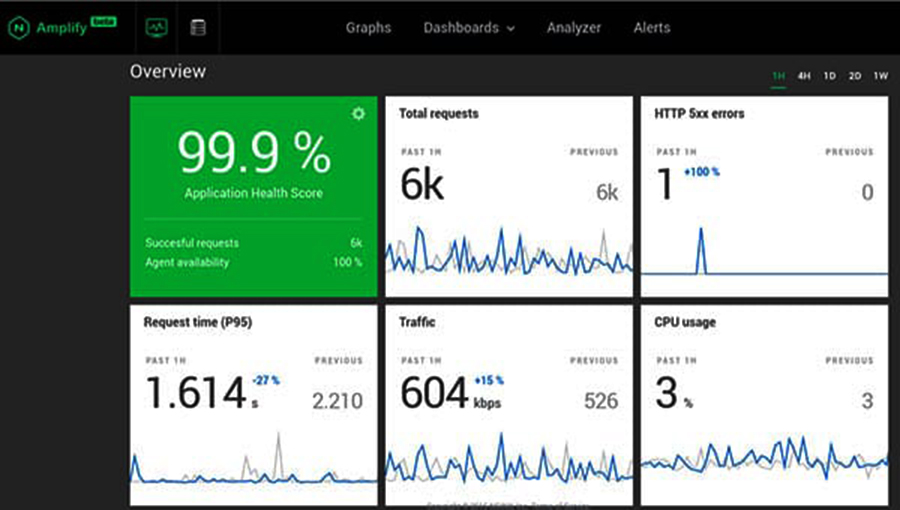
Finally steps, You can overview the status of our monitored server in the Web interface logging to your Amplify Account as in the snapshot:
nginx-amplify-agent

Congratulation’s! You have successfully installed Nginx Amplify Agent. Thanks for using this tutorial for installing Nginx Amplify Agent monitoring tool on your Ubuntu 16.04 LTS. For additional help or useful information, we recommend you to check the official Nginx Amplify Agent web site.

How To Install Nim on Ubuntu 16.04 LTS

Install Nim on Ubuntu 16

Nim is a systems and applications programming language. Statically typed and compiled, it gives unparalleled functionality in an elegant package.

This article assumes you have at least basic knowledge of linux, know how to use the shell, and most importantly, you host your site on your own VPS. The installation is quite simple and assumes you are running in the root account, if not you may need to add ‘sudo’ to the commands to get root privileges. I will show you through the step by step installation Nim programming language on a Ubuntu 16.04 (Xenial Xerus) server.

Install Nim on Ubuntu 16.04 LTS

Step 1. First make sure that all your system packages are up-to-date by running these following apt-get commands in the terminal.

sudo apt-get update
sudo apt-get upgrade

Step 2. Installing Nim.

Nim is available on Ubuntu 16.04 repository. To install Nim we can run command below:

apt-get install gcc
apt-get install nim

Now we can check Nim version installed:

### nim -v
Nim Compiler Version 0.12.0 (2017-11-02) [Linux: amd64]
Copyright (c) 2006-2015 by Andreas Rumpf

Next create sample hello world application for Nim. Create new file called hello.nim with contents below:

echo "Hello Nim! - wpcademy.com"

Compile the source code:

$ nim c hello.nim
Hint: system [Processing]
Hint: hello [Processing]
CC: hello
CC: system
Hint: [Link]
Hint: operation successful (9846 lines compiled; 0.910 sec total; 16.168MB; Debug Build) [SuccessX]

Now let’s execute the hello application:

### ./hello 
Hello Nim! - wpcademy.com

Congratulation’s! You have successfully installed Nim. Thanks for using this tutorial for installing latest stable version of Nim programming language on Ubuntu 16.04 LTS (Xenial Xerus) system. For additional help or useful information, we recommend you to check the official Nim web site.

How To Install Pghero on Ubuntu 16.04 LTS

Install Pghero on Ubuntu 16

PgHero is a performance dashboard for Postgres – health checks, suggested indexes, and more. PgHero 2.0 provides, even more, insight into your database performance with two additional features: query details and space stats. PgHero makes it easy to see the most time-consuming queries during a given time period.

This article assumes you have at least basic knowledge of Linux, know how to use the shell, and most importantly, you host your site on your own VPS. The installation is quite simple and assumes you are running in the root account, if not you may need to add ‘sudo’ to the commands to get root privileges. I will show you through the step by step installation Pghero on an Ubuntu 16.04 Xenial Xerus server.

Install Pghero on Ubuntu 16.04 LTS

Step 1. First make sure that all your system packages are up-to-date by running these following apt-get commands in the terminal.

sudo apt-get update
sudo apt-get upgrade

Step 2. Installing Pghero.

First, create pghero repo file and add pghero repo url:

wget -qO- https://dl.packager.io/srv/pghero/pghero/key | sudo apt-key add -
sudo wget -O /etc/apt/sources.list.d/pghero.list \
 https://dl.packager.io/srv/pghero/pghero/master/installer/ubuntu/14.04.repo

Install Pghero from the terminal using following command:

sudo apt-get update
sudo apt-get -y install pghero

Step 3. Configure Pghero.

We adding my local postgres database in pghero. You need to replace the user, password, port, hostname and database name with yours:

pghero config:set DATABASE_URL=postgres://user:password@hostname:5432/dbname
### pghero config:set DATABASE_URL=postgres://chedelics:wpcademy@localhost:5432/postgres ###

Start the pghero server:

sudo pghero config:set PORT=3001
sudo pghero config:set RAILS_LOG_TO_STDOUT=disabled
sudo pghero scale web=1

Use the following commands to manage the pghero:

sudo systemctl status pghero
sudo systemctl start pghero
sudo systemctl stop pghero
sudo systemctl restart pghero

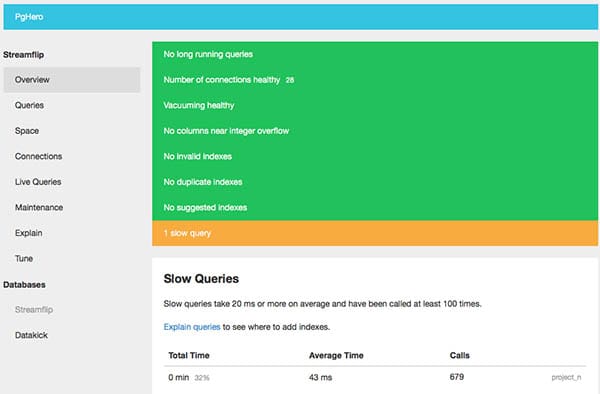
Now we have start the pghero server lets check the dashboard. Go to ipaddress of your server and port 3001.

curl -v http://localhost:3001/

pghero-web-interface

Congratulation’s! You have successfully installed Pghero. Thanks for using this tutorial for installing Pghero on your Ubuntu 16.04 system. For additional help or useful information, we recommend you to check the official Pghero web site.

How To Install Vagrant on Ubuntu 16.04 LTS

Install Vagrant on Ubuntu 16

Vagrant is an open source tool for building an entire virtual development environment. Frequently, a test environment is needed for analyzing the latest release and new tools. Also, it reduces the time spent on re-building that your OS. By default, vagrant uses virtualbox for managing the Virtualization. Vagrant acts as the fundamental configuration for managing/deploying multiple reproducible virtual environments with the same configuration.

This article assumes you have at least basic knowledge of Linux, know how to use the shell, and most importantly, you host your site on your own VPS. The installation is quite simple and assumes you are running in the root account, if not you may need to add ‘sudo’ to the commands to get root privileges. I will show you through the step by step installation Vagrant virtual development environment on an Ubuntu 16.04 Xenial Xerus server.

Install Vagrant on Ubuntu 16.04 LTS

Step 1. First make sure that all your system packages are up-to-date by running these following apt-get commands in the terminal.

sudo apt-get update
sudo apt-get upgrade

Step 2. Installing VirtualBox.

Install Virtualbox from the terminal using following command:

apt-get install virtualbox
apt-get install virtualbox-dkms

Step 3. Installing Vagrant.

Install Vagrant from the terminal using following command:

apt-get install vagrant

We can verify the installation by issue command to check the installed version of Vagrant:

vagrant -v

Step 4. Deploy your development environment.

Vagrant can quickly deploy the development environment. The following command will install precise32 box from the vagrant website. A box is nothing more then a specially packaged image that can later be used to provision a server:

vagrant box add precise32 http://files.vagrantup.com/precise32.box

Create a root directory for your Project. Then create a vagrant file in this folder by calling ‘vagrant init’, which will be the central file for the project configuration:

mkdir vagrant_project_wpcademy
cd vagrant_project_wpcademy
vagrant init

Edit the Vagrantfile in this directory and replace:

config.vm.box = "precise32"

Start Environment:

vagrant up
Bringing machine 'default' up with 'virtualbox' provider...
[default] Importing base box 'precise32'...
[default] Matching MAC address for NAT networking...
[default] Setting the name of the VM...
[default] Clearing any previously set forwarded ports...
[default] Clearing any previously set network interfaces...
[default] Preparing network interfaces based on configuration...
[default] Forwarding ports...

Congratulation’s! You have successfully installed Vagrant. Thanks for using this tutorial for installing Vagrant virtual development environment on your Ubuntu 16.04 system. For additional help or useful information, we recommend you to check the official Vagrant web site.

How To Install Rocket.Chat on Ubuntu 16.04 LTS

Install Rocket.Chat on Ubuntu 16

Rocket.Chat is one of the most popular open source chat software. A fantastic alternate to both Slack and compensated live chat software. It’s free, what is unlimited and it’s a bunch of cool features like Video chat, Screen sharing, Mobile apps and more.

This article assumes you have at least basic knowledge of Linux, know how to use the shell, and most importantly, you host your site on your own VPS. The installation is quite simple and assumes you are running in the root account, if not you may need to add ‘sudo’ to the commands to get root privileges. I will show you through the step by step installation Rocket.Chat on an Ubuntu 16.04 Xenial Xerus server.

Install Rocket.Chat on Ubuntu 16.04 LTS

Step 1. First make sure that all your system packages are up-to-date by running these following apt-get commands in the terminal.

sudo apt-get update
sudo apt-get upgrade

Step 2. Installing MongoDB.

Rocket.Chat requires MongoDB for the installation. In this step, we will install MongoDB from the MongoDB repository:

apt-key adv --keyserver hkp://keyserver.ubuntu.com:80 --recv EA312927

Then add the MongoDB repository with the command below:

echo "deb http://repo.mongodb.org/apt/ubuntu xenial/mongodb-org/3.2 multiverse" | sudo tee /etc/apt/sources.list.d/mongodb-org-3.2.list

Update the repository and install MongoDB with the apt command:

apt-get update
apt-get install mongodb-org

Open MongoDB and set it to run automatically at boot time:

systemctl enable mongod
systemctl start mongod

Step 3. Configure a MongoDB ReplicaSet.

This is an optional step, but those who want performance improvements should follow it. Rocket.Chat Server uses a MongoDB replica set:

nano /etc/mongod.conf

There, add this section:
replication:

 replSetName: "001-rs"

Save, exit and restart MongoDB:

systemctl restart mongod

Next, run its shell and initiate the replica set:

# mongo
> rs.initiate()

After you run rs.initiate(), you should get the following results:

{
 "info2" : "no configuration specified. Using a default configuration for the set",
 "me" : "wpcademy.com:27017",
 "ok" : 1
}

If the value of “ok” is not 1, then something’s wrong. Please go back and follow the steps exactly as shown in this tutorial.

Step 4. Installing Node.js and npm.

Node.js and npm are required by Rocket.Chat and are both available on Ubuntu repositories:

apt-get install nodejs npm

First, install the ‘n’ package globally on the whole system:

npm install -g n

The messaging system requires Node.js 4.5+, so ensure that you choose 4.5:

n 4.5

Check if you have the right node.js version:

node --version

Step 5. Installing Rocket.Chat.

First, download the latest version of Rocket.Chat:

cd /var/www
curl -L https://rocket.chat/releases/latest/download -o rocket.chat.tgz

And extract it:

tar xzf rocket.chat.tgz

Rename the extracted folder:

mv bundle Rocket.Chat

Run the following commands to add some environment variables:

cd Rocket.Chat/programs/server
npm install
cd ../..
export ROOT_URL=http://your-host-name.com-as-accessed-from-internet:3000/
export MONGO_URL=mongodb://localhost:27017/rocketchat
export PORT=3000
node main.js

Step 6. Install LEMP (Linux, Nginx, MariaDB and PHP) server.

A Ubuntu 16.04 LEMP server is required. If you do not have LAMP installed, you can follow our guide here.

Create a new SSL directory, in which certificates will be stored:

mkdir -p /etc/nginx/ssl/

In this directory, generate a new SSL certificate file:

cd /etc/nginx/ssl
openssl req -new -x509 -days 365 -nodes -out /etc/nginx/ssl/rocketchat.crt -keyout /etc/nginx/ssl/rocketchat.key
chmod 400 rocketchat.key

Next, create a Virtual Host configuration:

nano /etc/nginx/sites-available/rocketchat

There, paste the following configuration:

# Upstreams
upstream backend {
 server 127.0.0.1:3000;
}
 
# Redirect Options
server {
 listen 80;
 server_name chat.mydomain.com;
 # enforce https
 return 301 https://$server_name$request_uri;
}
 
# HTTPS Server
server {
 listen 443;
 server_name chat.mydomain.com;
 
 error_log /var/log/nginx/rocketchat.access.log;
 
 ssl on;
 ssl_certificate /etc/nginx/ssl/rocketchat.crt;
 ssl_certificate_key /etc/nginx/ssl/rocketchat.key;
 ssl_protocols TLSv1 TLSv1.1 TLSv1.2; # dont use SSLv3 ref: POODLE
 
 location / {
 proxy_pass http://192.168.1.110:3000/;
 proxy_http_version 1.1;
 proxy_set_header Upgrade $http_upgrade;
 proxy_set_header Connection "upgrade";
 proxy_set_header Host $http_host;
 
 proxy_set_header X-Real-IP $remote_addr;
 proxy_set_header X-Forward-For $proxy_add_x_forwarded_for;
 proxy_set_header X-Forward-Proto http;
 proxy_set_header X-Nginx-Proxy true;
 
 proxy_redirect off;
 }
}

Save, exit and activate this configuration:

ln -s /etc/nginx/sites-available/rocketchat /etc/nginx/sites-enabled/rocketchat

Run:

nginx -t

And make sure there are no errors. If everything’s ok, restart Nginx:

systemctl restart nginx

Update the environment variables and run Rocket.Chat:

cd /var/www/Rocket.Chat/
export ROOT_URL=https://chat.mydomain.com
export MONGO_URL=mongodb://localhost:27017/rocketchat?replicaSet=001-rs
export PORT=3000
node main.js

Step 7. Accessing Rocket.Chat.

Rocket.Chat will be available on HTTP port 80 by default. Open your favorite browser and navigate to http://chat.mydomain.com and complete the required the steps to finish the installation. If you are using a firewall, please open port 80 to enable access to the control panel.

Congratulation’s! You have successfully installed Rocket.Chat with Docker. Thanks for using this tutorial for installing Rocket.Chat open source chat software on your Ubuntu 16.04. For additional help or useful information, we recommend you to check the official Rocket.Chat web site.